Can Dogs and Cats Eat Diwali Sweets? Foods to Avoid
Do not offer mithai to dogs or cats. Plain sweets may cause digestive upset, while particular ingredients can cause poisoning. Check the recipe and seek veterinary advice promptly after a potentially toxic exposure.
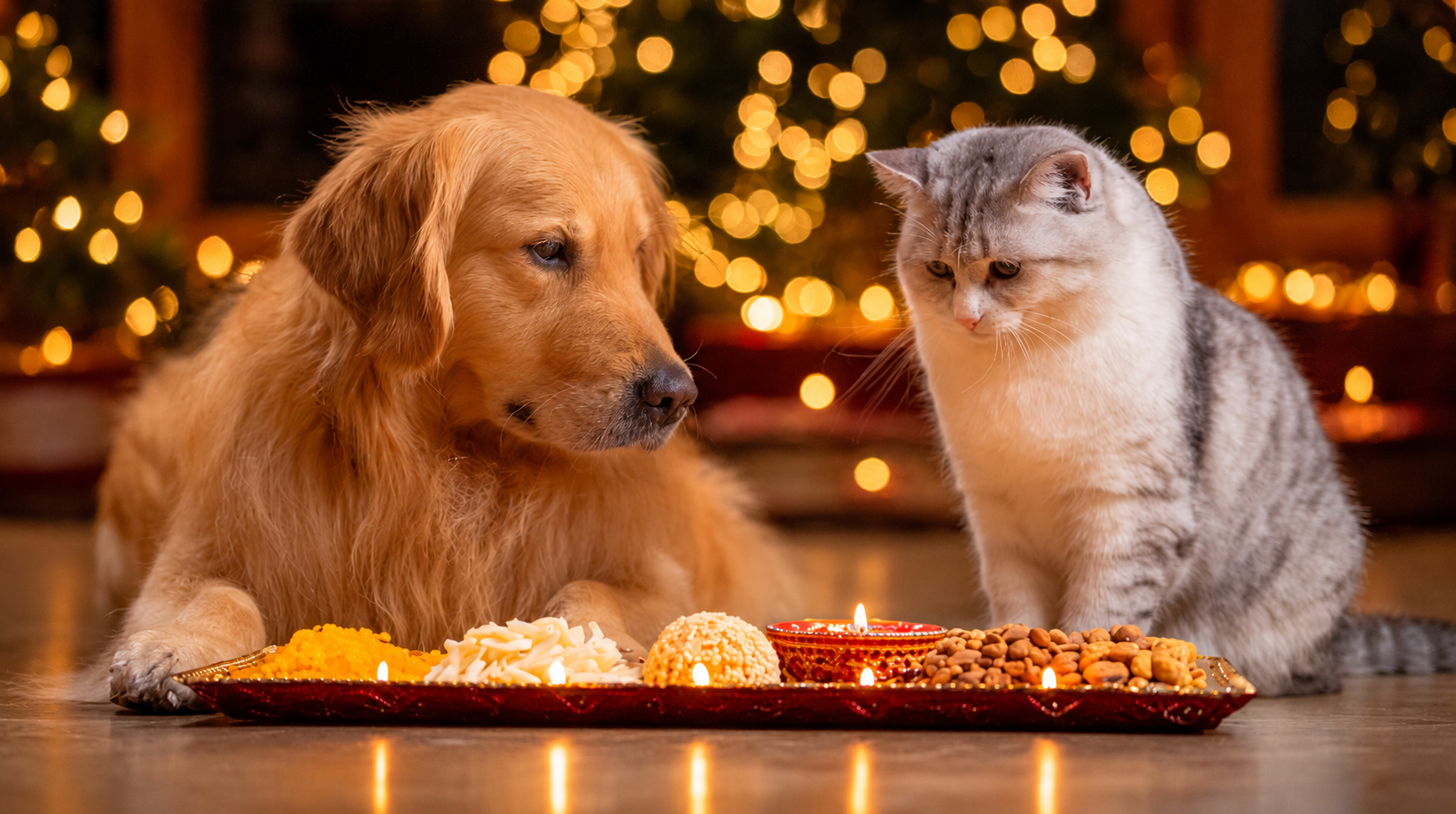
Celebrate together while keeping festive food out of reach. AI-generated editorial illustration.
Diwali means delicious mithai, family gatherings and plates full of festive treats. But while you enjoy a laddoo or a piece of kaju katli, your dog may be waiting beside you, hoping for a bite.
Before you share, here’s something every Indian pet parent should know: not all festive foods are safe for dogs and cats.
Some sweets may simply upset your pet’s stomach. Others contain ingredients that can cause serious poisoning. Chocolate affects both dogs and cats; raisins and xylitol are particular concerns for dogs. Onion and garlic in homemade dishes can also be harmful.
This guide explains which Diwali foods to avoid, what makes them risky, what to do if your pet accidentally eats something harmful, and how to include your furry family member in the celebrations safely.
Which Diwali foods need urgent attention
Chocolate, onion, garlic and alcohol are hazards for both dogs and cats. Grapes, raisins and xylitol are especially important poisoning risks in dogs; do not assume identical toxicity in cats. Rich, plain sweets are generally unsuitable rather than automatically poisonous. [1–5]
| Diwali food | Main concern | Action |
|---|---|---|
| Chocolate barfi, brownies, cocoa sweets | Chocolate toxicity | Contact a vet promptly after ingestion |
| Raisin laddoo, kishmish sweets | Kidney injury risk in dogs | Contact a vet immediately |
| Onion- or garlic-based gravies | Red blood cell damage | Avoid for dogs and cats |
| Sugar-free sweets containing xylitol | Low blood sugar and possible liver injury in dogs | Seek urgent veterinary advice |
| Gulab jamun, jalebi, plain laddoo | High sugar and fat | Do not offer as treats |
| Samosas, pakoras, namkeen | High fat, salt and seasonings | Avoid sharing |
| Alcohol-containing desserts or drinks | Alcohol poisoning | Seek urgent veterinary advice |
Risk depends on ingredients, amount eaten, species, body weight and health. [1–5]
Important: Risk depends on the ingredients, quantity, species and body weight. A food being listed as unsuitable does not mean it is automatically poisonous.
Can dogs eat laddoo kaju katli or gulab jamun
Indian sweets are not necessarily toxic to dogs, but they are generally not suitable treats. Many contain large amounts of sugar, ghee, butter, milk solids or nuts, and some include genuinely dangerous ingredients.
Here’s how to think about common Diwali favourites.
Laddoo
Besan and motichoor laddoos are typically rich in sugar and ghee. They may cause stomach upset. Raisin-containing laddoos are especially concerning for dogs because of the kidney injury risk.
Kaju katli
Plain kaju katli is not generally considered a toxic food in the way chocolate or raisins are. However, its sugar and cashew content make it an unsuitable regular treat. Check for chocolate or other added ingredients.
Gulab jamun
Gulab jamun is soaked in sugar syrup and often contains milk solids and fat. It can trigger digestive upset, especially if your dog eats several pieces.
Jalebi
Jalebi is fried and soaked in sugar syrup. It provides no nutritional benefit to pets and may cause vomiting or diarrhoea.
Barfi and soan papdi
Plain varieties are usually high in sugar and fat. Chocolate-flavoured or raisin-containing varieties introduce additional risks. Check the ingredients rather than assuming all mithai are equally dangerous.
What if your dog ate a small piece of plain mithai
A small piece of plain sweet does not automatically mean poisoning. Check the ingredients and contact your veterinarian if you are unsure, particularly for a small dog, a pet with an existing medical condition, or one showing symptoms. If the sweet contains chocolate, raisins or xylitol, seek veterinary advice immediately rather than waiting for symptoms.
Why are chocolate and cocoa dangerous for pets
Chocolate contains two compounds called theobromine and caffeine, which can affect a pet’s heart and nervous system.
Dogs are particularly prone to chocolate poisoning because they may readily eat chocolate left unattended. Cats are also susceptible.
Dark chocolate, baking chocolate and cocoa powder generally contain higher concentrations of these compounds than milk chocolate.
Symptoms can include vomiting, diarrhoea, restlessness, excessive thirst, a fast or irregular heartbeat, tremors and seizures. [1]
During Diwali, watch out for chocolate gift boxes, brownies, chocolate barfi, cocoa-based desserts and chocolate-coated dry fruits.
If your pet eats chocolate: Contact a veterinarian promptly. The type and amount of chocolate, your pet’s weight and the time of ingestion all matter.
Are raisins and grapes dangerous for dogs
Yes. Grapes and raisins can cause acute kidney injury in some dogs, and the risk is unpredictable.
This is particularly important during Diwali because raisins, commonly called kishmish, may be hidden inside sweets, dry-fruit mixtures and festive desserts.
Some affected dogs develop vomiting, diarrhoea, weakness, reduced appetite or changes in drinking and urination. Kidney injury may develop after the initial exposure.
The evidence for this form of toxicity is much stronger in dogs than in cats, but grapes and raisins should still be kept away from both.
Never assume that one raisin is harmless. If your dog eats raisins or grapes, contact a veterinarian immediately, even if your dog appears completely normal. [3]
Can dogs and cats eat Diwali snacks like samosas, pakoras and namkeen
These snacks are best kept off your pet’s menu.
Samosas, pakoras, chakli, mixtures, sev and other namkeen may contain high amounts of fat, salt, chilli and seasonings. Some recipes also contain onion or garlic.
High-fat foods can cause digestive upset and may contribute to pancreatitis in susceptible pets. Excessively salty foods can also cause health problems.
The same caution applies to rich festive leftovers, including paneer gravies, heavily seasoned curries and oily rice dishes. Do not offer imli chutney either: tamarind ingestion has been associated with kidney injury in dogs, and recipes may contain other unsuitable ingredients. [3]
Homemade doesn’t automatically mean pet-safe. Even a dish prepared with fresh ingredients may contain seasonings that are unsuitable for dogs and cats.
Why are onion and garlic dangerous for dogs and cats
Onion and garlic contain compounds that can damage red blood cells, potentially leading to anaemia.
Both dogs and cats are at risk, with cats generally more susceptible. Raw, cooked, powdered and dehydrated forms can all be harmful.
This matters in Indian households because onion and garlic are common ingredients in curries, gravies, masalas and savoury snacks.
Signs of red blood cell damage may take several days to become noticeable. They can include weakness, pale gums, rapid breathing and lethargy.
Avoid feeding your pet leftover curry, gravy or seasoned food, even if you remove the visible onion pieces. Contact your vet after a suspected onion or garlic exposure, even if signs have not appeared. [4]
Are sugar-free sweets safe for dogs
Not necessarily.
Some sugar-free products contain xylitol, a sweetener that can cause a rapid and dangerous drop in blood sugar in dogs. Severe exposures may also cause liver injury.
Xylitol is not present in every sugar-free sweet, so checking the ingredient list is essential. It may also be labelled as birch sugar in some products.
Signs of xylitol poisoning can include vomiting, weakness, loss of coordination and seizures.
If you suspect your dog has consumed xylitol, seek emergency veterinary advice immediately. [5]
What about dry fruits and nuts during Diwali
Dry-fruit gift boxes are common during Diwali, but different ingredients carry different risks.
Raisins are particularly dangerous for dogs. Cashews, almonds and other fatty nuts may cause digestive problems, while macadamia nuts are toxic to dogs.
Salted, chocolate-coated and heavily seasoned nuts introduce additional concerns. Whole nuts may also present a choking risk, particularly for smaller pets.
Keep dry-fruit gift boxes closed and out of reach, and do not use mixed nuts as pet treats. [2]
What are the symptoms of food poisoning in dogs and cats
Symptoms depend on what your pet has eaten, how much was consumed and the pet’s size and health.
Warning signs that need veterinary attention
- Repeated vomiting or severe diarrhoea
- Unusual weakness, lethargy or loss of coordination
- Excessive drooling or restlessness
- Tremors, twitching or seizures
- Pale gums or difficulty breathing
- Collapse or reduced responsiveness
Some toxic effects are delayed. A pet may initially seem normal even after eating something dangerous.
Do not wait for symptoms after known ingestion of chocolate, raisins, xylitol or other potentially toxic ingredients.
What should you do if your dog or cat eats dangerous Diwali food
If you discover that your pet has eaten a potentially toxic festive food, act promptly.
- Remove access to the food. Keep your pet away from any remaining sweets, snacks or wrappers.
- Identify the ingredients. Check the packaging or recipe, especially for chocolate, raisins, onion, garlic and xylitol.
- Estimate how much was eaten and when. Note your pet’s approximate body weight and any symptoms.
- Call your veterinarian or the nearest emergency veterinary hospital. Follow their advice about whether immediate examination is required.
- Do not try home remedies. Do not force vomiting, give salt water, milk, oil or medication unless a veterinarian specifically instructs you to do so.
Keep the food packet or ingredient list available for the veterinarian. [6]
| Tell the vet | Details to have ready |
|---|---|
| Pet | Dog or cat, approximate weight and medical conditions |
| Food | Name, ingredients, packet or recipe photograph |
| Exposure | Estimated amount and time eaten |
| Condition | Symptoms, or whether your pet currently appears normal |
Important: Do not rely on internet home remedies or wait until the next morning if your pet has swallowed a known toxic ingredient.
What can you give your dog or cat instead of Diwali sweets
Your pet can still be included in the festivities without sharing your mithai.
The safest option is to maintain their usual complete and balanced diet and offer an appropriate pet treat in moderation.
For dogs, a small amount of plain, cooked, unseasoned pumpkin or carrot may be suitable if already tolerated. For cats, a small portion of plain, fully cooked, boneless chicken without salt, onion or garlic may be an option, provided it suits their dietary needs.
Avoid introducing unfamiliar foods during a busy celebration, especially if your pet has a sensitive stomach or follows a veterinary-prescribed diet.
Include your pet with a familiar meal, an appropriate treat and time together. Choose food and treats intended for your pet’s species and life stage.
How can you keep your pet safe during Diwali gatherings
With guests arriving, sweets being exchanged and food being served throughout the day, preventing accidental feeding becomes especially important. Before the holiday, save your regular vet’s number and confirm the nearest emergency clinic’s opening hours.
- Store mithai and chocolate boxes in closed cupboards or containers.
- Tell guests and children not to feed your pet without permission.
- Keep food plates and dry-fruit trays away from accessible surfaces.
- Dispose of food wrappers, skewers, bones and leftovers in covered bins.
- Feed your pet their usual meal before a busy gathering.
- Provide fresh drinking water and a quiet, comfortable indoor space.
- Keep fireworks, diyas and candles away from pets.
Remember that Diwali safety goes beyond food. Loud fireworks, open doors and unfamiliar visitors can frighten pets or increase the risk of escape. Make sure your pet has a secure place to rest.
Can cats eat mithai milk sweets or prasad
Do not offer cats mithai, kheer or sweetened milk. Dairy can cause digestive upset, and chocolate, onion and garlic are established hazards. Evidence for grape and raisin kidney toxicity is much stronger in dogs; xylitol poisoning guidance is also principally dog-specific. These differences do not make mixed festive foods suitable for cats. [2–5]
Prasad is not a single recipe. Check for raisins, dairy, ghee and other additions, just as you would with any sweet. Ask family members not to share offerings with pets. If an unlabelled sweet has been eaten, ask the maker for the recipe while you contact your vet; do not delay the call.
Frequently asked questions
Can dogs eat besan laddoo
Plain besan laddoo is not typically considered poisonous, but its sugar and ghee content make it unsuitable as a dog treat. Avoid giving it intentionally and check for added raisins or other harmful ingredients.
Is kaju katli safe for dogs
Plain kaju katli is generally not a toxic food, but its sugar and cashew content can upset a dog’s stomach. Chocolate-coated or specially flavoured versions may contain additional hazards.
Can dogs eat gulab jamun
Dogs should not be offered gulab jamun. Its sugar syrup, fat and dairy ingredients can cause digestive upset, particularly in larger amounts.
Can cats eat Indian sweets
Cats should not be given Indian sweets. These foods do not meet their nutritional needs, and certain ingredients, including chocolate, onion and garlic, can be harmful.
What if my dog eats one raisin
Contact a veterinarian immediately. The effects of raisins in dogs can be unpredictable, and even a small exposure deserves professional assessment.
Can dogs eat Diwali namkeen
It is best to avoid namkeen because it can contain excess salt, fat and spices, as well as onion or garlic seasoning.
Can I give my dog a little paneer during Diwali
A small amount of plain, unseasoned paneer may be tolerated by some dogs, but its fat and dairy content can cause digestive upset. Avoid rich paneer curries and consult your veterinarian if your dog has dietary restrictions.
What if my dog eats chocolate but seems fine
Contact a veterinarian promptly. Signs of chocolate poisoning may not appear immediately, and risk depends on the chocolate type, amount eaten and your dog’s weight.
A safer Diwali for your dog or cat
Diwali is a time for sharing happiness with everyone at home, including our pets. But the best way to show them love isn’t by giving them a piece of every sweet on the table.
Keep potentially toxic foods out of reach, help guests understand your pet’s dietary needs and stick to familiar, pet-appropriate meals and treats.
A safe Diwali is a happier Diwali — for you and your four-legged family members.
Veterinary disclaimer: This article is for general educational purposes and does not replace professional veterinary diagnosis or treatment. Contact your veterinarian promptly if your pet has eaten a potentially toxic food.
Sources for the article
- Merck Veterinary Manual. Chocolate toxicosis in animals.
https://www.merckvetmanual.com/toxicology/food-hazards/chocolate-toxicosis-in-animals - ASPCA. People foods to avoid feeding your pets.
https://www.aspca.org/pet-care/aspca-poison-control/people-foods-avoid-feeding-your-pets - Merck Veterinary Manual. Grape raisin and tamarind toxicosis in dogs.
https://www.merckvetmanual.com/toxicology/food-hazards/grape-raisin-and-tamarind-vitis-spp-tamarindus-spp-toxicosis-in-dogs - Merck Veterinary Manual. Garlic and onion toxicosis in animals.
https://www.merckvetmanual.com/toxicology/food-hazards/garlic-and-onion-allium-spp-toxicosis-in-animals - FDA. Paws off xylitol is dangerous for dogs.
https://www.fda.gov/consumers/consumer-updates/paws-xylitol-its-dangerous-dogs - ASPCA. Is it ever safe to induce vomiting.
https://www.aspca.org/news/it-ever-safe-induce-vomiting
Sources checked 2 November 2026. Recipe-specific judgements apply these ingredient hazards to common Indian foods; recipes differ between homes and sweet shops. This is an editorial draft awaiting veterinary approval, not a veterinary-reviewed publication.