Your Complete Himalayan Cat Guide: Care, Diet, Personality & Grooming
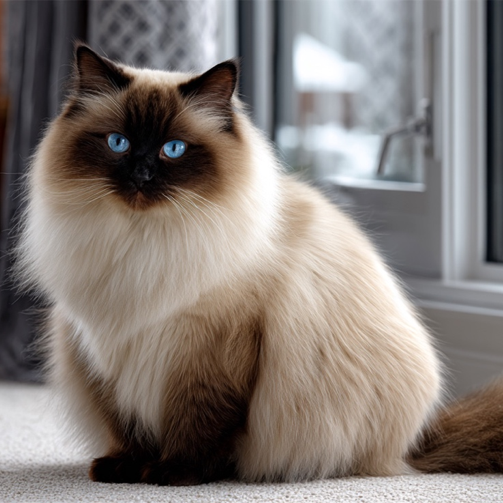
The Himalayan cat is known for its striking blue eyes, luxurious long coat and gentle personality. With Persian-type facial features and Siamese-style colour points, Himalayans are affectionate indoor companions that enjoy calm surroundings and regular interaction with their families.
However, their beautiful coat and shortened facial structure also mean they need consistent grooming, eye care, temperature management and preventive veterinary attention.
Whether you are considering a Himalayan kitten or already have one at home, this guide covers Himalayan cat care, personality, health, food, grooming and practical considerations for Indian pet parents.
Written by: Dr. Nikhil Mehta
Reviewed On: sep 15
Editorial review: Drools Pet Nutrition Team
Himalayan Cat Characteristics at a Glance
| Characteristic | Himalayan Cat |
|---|---|
| Size | Medium |
| Typical weight | About 3.2 to 5.4 kg |
| Coat | Long, dense and colour-pointed |
| Eye colour | Blue |
| Personality | Gentle, affectionate and playful |
| Activity level | Low to moderate |
| Grooming needs | High |
| Himalayan cat lifespan | Around 8 to 11 years |
| Best suited for | Calm indoor households |
What Is a Himalayan Cat’s Personality Like?
The typical Himalayan cat personality is calm, affectionate and people-oriented. Himalayans often enjoy staying close to their families but usually have a quieter temperament than highly active or vocal breeds.
They can adapt well to families, apartments and homes with other compatible pets when introductions are gradual.
Although they enjoy relaxing, Himalayans still need daily activity. Short sessions with wand toys, balls, scratching posts and puzzle feeders can encourage movement and mental stimulation.
Himalayan Cat Grooming and Coat Care
Himalayan cat grooming should be part of the daily routine because their long, dense coat can develop knots and painful mats when loose hair is not removed regularly.
Use a suitable comb or brush and pay particular attention to:
- Behind the ears
- Under the front legs
- Chest and stomach
- Back legs
- Around the tail
Starting grooming while your cat is young can make handling easier throughout adulthood.
Himalayans may also develop visible tear staining because of their facial structure. Gently wipe around the eyes with a clean, soft, damp cloth. Persistent redness, pain, thick discharge, cloudiness or squinting requires veterinary attention.
Routine Himalayan cat care should also include nail trimming, ear checks and regular dental care.
Common Himalayan Cat Health Concerns
Himalayans share several health considerations associated with their Persian ancestry and brachycephalic facial structure. Not every Himalayan will develop these conditions, but knowing the signs can support earlier veterinary care.
Brachycephalic Airway Problems
Brachycephalic cats have shortened facial structures that can reduce space within the upper airways. More severely affected cats may experience noisy breathing, reduced exercise tolerance or difficulty coping with heat. [1]
Breathing difficulty should never simply be accepted as normal for the breed. Open-mouth breathing in a cat requires urgent veterinary attention.
Polycystic Kidney Disease
Polycystic kidney disease, or PKD, is an inherited disorder strongly associated with Persian and Persian-related cats. Fluid-filled cysts develop in the kidneys and may eventually affect kidney function. [2]
When choosing a Himalayan kitten from a breeder, ask about PKD testing and documented health screening of the parents.
Hypertrophic Cardiomyopathy
Hypertrophic cardiomyopathy, or HCM, is the most commonly diagnosed form of heart disease in cats. It causes abnormal thickening of the heart muscle and may initially produce no visible symptoms. [3]
HCM can occur in cats of any breed, but it should not be presented as a proven Himalayan-specific inherited condition.
Rapid breathing, weakness or sudden breathing difficulty requires veterinary assessment.
Patellar Luxation
Patellar luxation occurs when the kneecap moves out of its normal position. It can occur in cats and may cause intermittent limping, skipping movements or reluctance to use an affected leg. [4]
Persistent changes in movement should be examined by a veterinarian.
Dental Disease
The shortened facial structure of Persian-type cats can contribute to dental crowding and abnormal tooth positioning. Research in brachycephalic Persian cats has found oral and dental abnormalities that may increase susceptibility to dental disease. [5]
Regular home dental care and veterinary oral examinations are therefore important.
Best Himalayan Cat Food: What Should You Feed?
The best Himalayan cat food is a complete and balanced diet appropriate for the cat’s age, body condition, activity level and health. Himalayans do not require a special ingredient simply because of their breed.
Look for nutrition that provides:
- Appropriate animal protein
- Essential fatty acids
- Taurine
- Balanced vitamins and minerals
- Suitable calories for healthy body condition
- A formulation appropriate for kittens or adults
WSAVA nutritional guidance recommends assessing the individual cat’s life stage, body condition, muscle condition and health rather than judging food only by its ingredient list. [6]
Himalayan kittens should receive food formulated specifically for growth. Adult cats should receive measured portions because excess calories combined with relatively moderate activity can lead to unwanted weight gain.
For adult Himalayans whose nutritional needs are suited to wet food, Drools Chicken Mousse for Adult Cats can be considered as a feeding option. Food choice should still be based on the individual cat’s age, body condition, preferences and health needs.
Fresh drinking water should always be available.
Caring for a Himalayan Cat in India
Himalayan cats can adapt to Indian homes, but their long coat and shortened facial structure make heat management particularly important during hot and humid weather.
For comfortable Himalayan cat care in India:
- Keep the cat primarily indoors.
- Provide a cool and well-ventilated environment.
- Use appropriate cooling during extreme summer heat.
- Keep fresh water available in several locations.
- Groom daily during humid weather.
- Keep bedding clean and completely dry.
- Secure balconies and windows with pet-safe screening.
- Avoid strenuous play during the hottest part of the day.
During the monsoon, check the coat regularly for mats, dampness or irritated skin.
Heavy panting, open-mouth breathing, weakness or collapsing during the hot weather requires immediate veterinary attention.
Vaccinations and Rabies Prevention
Vaccinations should be tailored to the individual cat’s age, health and exposure risk. International feline vaccination guidelines recommend core vaccination while assessing additional vaccines according to individual risk. [7]
Even cats that live indoors can experience unexpected exposure through escape, travel, boarding or contact with another animal. Understanding the usual cat vaccination schedule in India can help pet parents prepare for kitten and adult vaccinations, while a veterinarian should confirm the individual cat’s schedule.
Rabies remains an important zoonotic disease in India, and prevention through vaccination and responsible animal healthcare remains a public-health priority. Understanding possible rabies symptoms in cats can help pet parents recognise when urgent professional guidance may be needed. [8]
Any suspected rabies exposure requires immediate veterinary and public-health guidance.
How Long Do Himalayan Cats Live?
The Himalayan cat lifespan is commonly around 8 to 11 years, although individual longevity varies with genetics, nutrition, body condition, indoor safety and preventive veterinary care.
Routine veterinary examinations help monitor dental health, kidney function, breathing, mobility, weight and age-related changes.
Is a Himalayan Cat Right for You?
A Himalayan can be a wonderful companion for someone who wants a calm, affectionate indoor cat and is prepared for daily grooming.
The breed may be less suitable if you:
- Want a low-maintenance coat
- Cannot provide regular grooming
- Cannot maintain a comfortable indoor temperature
- Prefer a highly athletic or independent cat
Their appearance may attract attention, but long-term commitment to grooming and healthcare should be the deciding factor.
Frequently Asked Questions
Are Himalayan Cats Good for Apartments?
Yes. Himalayan cats generally adapt well to apartment living because they have moderate activity needs and usually prefer calm indoor environments. They still require daily play, scratching opportunities, grooming and appropriate cooling during hot Indian summers.
How Often Should a Himalayan Cat Be Groomed?
A Himalayan cat should ideally be combed every day. Daily grooming removes loose hair, helps prevent painful mats and gives pet parents an opportunity to check the skin for irritation, lumps or other changes.
Do Himalayan Cats Shed a Lot?
Yes. Himalayans have long, dense coats and can shed considerably. Regular brushing helps control loose hair and reduces tangling, particularly during periods of heavier seasonal shedding.
Final Thoughts
The Himalayan cat combines a gentle personality with distinctive grooming and healthcare needs. Daily coat maintenance, balanced nutrition, dental and eye care, vaccinations and protection from India’s extreme heat are important parts of responsible ownership.
For households prepared to provide this level of care, a Himalayan can be a calm, affectionate and rewarding indoor companion for many years.
This article provides general educational information and does not replace diagnosis, treatment or individual advice from a qualified veterinarian.
References
- Chen CR, et al. Characterization of Brachycephalic Obstructive Airway Syndrome in Cats Using Barometric Whole-Body Plethysmography. Animals. 2026;16(6):959.
- Lyons LA, et al. Feline polycystic kidney disease mutation identified in PKD1. Journal of the American Society of Nephrology. 2004;15(10):2548–2555.
- Luis Fuentes V, et al. ACVIM consensus statement guidelines for the classification, diagnosis, and management of cardiomyopathies in cats. Journal of Veterinary Internal Medicine. 2020;34(3):1062–1077.
- Merck Veterinary Manual. Patellar Luxation in Dogs and Cats.
- Mestrinho LA, et al. Oral and dental anomalies in purebred, brachycephalic Persian and Exotic cats. Journal of the American Veterinary Medical Association. 2018;253(1):66–72.
- World Small Animal Veterinary Association. WSAVA Global Nutrition Guidelines.
- AAHA/AAFP. 2020 AAHA/AAFP Feline Vaccination Guidelines.
- National Centre for Disease Control, Ministry of Health & Family Welfare, Government of India. National Rabies Control Programme.