Why Are Dogs Afraid of Thunderstorms? Causes, Signs & How to Calm Them
Thunderstorms can turn an otherwise relaxed dog into a trembling, pacing or hiding pet. Dogs may react not only to the sound of thunder but also to lightning, heavy rain, wind and other changes associated with an approaching storm.
Thunder anxiety in dogs can range from mild uneasiness to a severe noise phobia involving escape attempts, destructive behaviour or self-injury. Creating a secure space, reducing exposure to storm cues, staying nearby and following a veterinarian-approved behaviour plan can help affected dogs feel safer.
What Should You Do When Your Dog Is Afraid of Thunder?
Bring your dog indoors, secure doors and windows, provide access to a quiet hiding place and reduce outside sound and light. Remain calmly available, avoid punishment and contact a veterinarian when fear causes panic, escape attempts, injury or prolonged distress.
Medically Reviewed by: Dr. Shashank Sinha
Reviewed On: 21/08/2026
Editorial Review: Drools : Drools Pet Nutrition Team
Dogs and Thunderstorm Anxiety at a Glance
| Question | Quick answer |
|---|---|
| Why are dogs afraid of thunderstorms? | Thunder is loud, sudden and unpredictable, while rain, wind and lightning can become additional fear triggers |
| What are the common signs? | Panting, pacing, trembling, hiding, drooling, whining and escape attempts |
| How can I calm my dog? | Move the dog indoors, create a quiet safe space, mask outside sounds and remain calmly available |
| Should I use treats? | Yes, when the dog is calm enough to eat and treats are included in its daily allowance |
| Should I punish fearful behaviour? | No. Punishment can increase distress |
| Can training help? | Gradual desensitisation and counterconditioning can help when practised below the dog’s fear threshold |
| When is veterinary help needed? | When fear is severe, worsening, newly developed or creating a risk of escape, injury or aggression |
Why Are Dogs Afraid of Thunderstorms?
Thunder is loud, unpredictable and may cause windows, doors or floors to vibrate. Because a dog cannot understand where the sound comes from or when it will stop, its natural response may be to seek shelter or escape.
Thunder may be only one trigger. Heavy rain, lightning, wind, darkening skies, building vibrations and other environmental changes associated with an approaching storm can also contribute.
Dogs may therefore become anxious before the first thunderclap. Over time, early cues such as wind or raindrops can predict the frightening event and become triggers themselves.
What Causes Thunder Anxiety in Dogs?
There is rarely a single cause of thunder anxiety. Genetics, learning, early experiences, age and health may all influence how strongly a dog reacts.
1. A natural startle response
Sudden loud sounds trigger alertness. Some dogs recover quickly, while others remain highly aroused or begin anticipating the next noise.
2. A previous frightening experience
A dog may associate storms with being left alone, trapped outdoors, injured or otherwise distressed, creating a lasting fear response.
3. Limited early exposure to sounds
Insufficient positive exposure to everyday sounds during development may contribute to later noise sensitivity, although it is rarely the only cause.
4. Genetic and individual sensitivity
Temperament, genetics and previous learning can influence how strongly an individual dog reacts to loud or unpredictable sounds.
5. Age-related changes
Dogs that previously tolerated storms may become more anxious as changes in hearing, vision, cognition or stress tolerance develop.
6. Pain or another medical condition
Pain or illness can reduce a dog’s ability to cope with stress. New or suddenly worsening storm fear should therefore be discussed with a veterinarian.
Signs of Thunder Anxiety in Dogs
Signs of thunder anxiety can range from subtle changes in behaviour to severe panic. Dog anxiety during rain or thunder may begin before the first thunderclap, so recognising early signs can help pet parents respond sooner and reduce the risk of escalating distress or escape behaviour.
Mild signs
A mildly anxious dog may:
- Follow family members closely
- Watch windows or doors
- Hold its ears back or lower its tail
- Refuse food or play
- Seek a familiar hiding place
Moderate signs
As anxiety increases, the dog may show:
- Panting or pacing
- Trembling
- Whining or barking
- Drooling
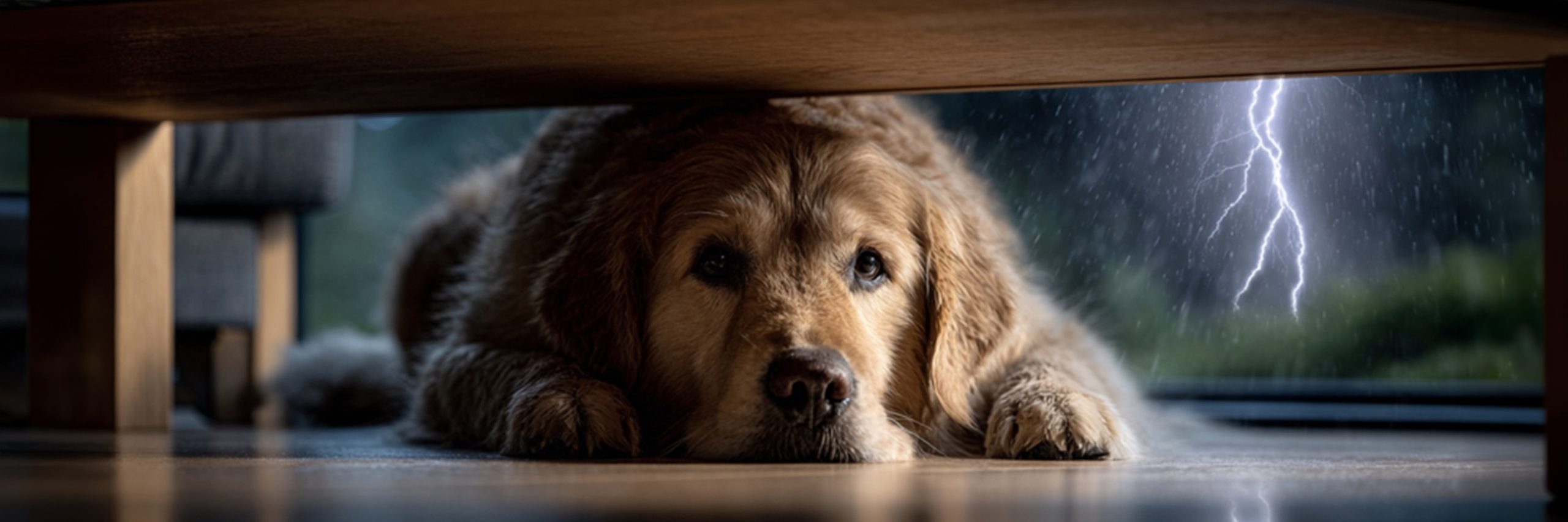
- Hiding under furniture
- Clinging to a familiar person
Severe signs
Severe thunderstorm anxiety may involve:
- Scratching or chewing doors and windows
- Attempting to escape or break out of a crate
- Damaging furniture
- Injuring paws, teeth or the mouth
- Becoming unresponsive to familiar cues
- Defensive aggression when restrained
Thunderstorm fear can create an escape risk, so secure doors, gates and windows and keep identification and microchip information current.
When Is Thunderstorm Anxiety an Emergency?
Contact a veterinarian urgently for:
- Self-injury or heavy bleeding
- Collapse or seizure
- Severe breathing difficulty or overheating
- Swallowing a dangerous object
- Inability to contain the dog safely
- Sudden severe aggression
Protect yourself from redirected bites. A terrified dog may react defensively when grabbed or restrained, even when it is normally gentle. Fear-related aggression is intended to increase distance from a perceived threat.
How to Calm a Dog During a Thunderstorm
The goal during a storm is not to conduct a training session. It is to reduce exposure, protect the dog from injury and help it remain as comfortable as possible.
1. Bring your dog indoors before the storm
Check forecasts during thunderstorm season and bring your dog inside before heavy rain or thunder begins. Complete walks and toilet breaks early where possible, and use a secure leash if an outdoor break is unavoidable.
2. Create a safe space
Provide access to a quiet interior room with familiar bedding, water and a favourite toy. Let the dog choose whether to enter or leave. Use a crate only if the dog already sees it as a secure resting place.
3. Reduce flashes and outside noise
Close windows and curtains. White noise, a fan, television or calm music may help reduce the contrast between a quiet room and sudden thunder.
4. Let your dog hide
Hiding is a normal coping behaviour. Allow the dog to use a safe hiding place and never pull it out to make it “face” the storm.
5. Stay calmly available
Remain nearby and offer calm contact when your dog seeks it. Some dogs prefer physical contact while others prefer space. Avoid restraining a dog that is trying to move away, and never punish fearful behaviour.
6. Offer food enrichment when the dog can eat
A food toy, lick mat or suitable chew may help a mildly anxious dog. If the dog refuses food, it may already be too distressed for food-based distraction.
7. Follow the prescribed medication plan
Dogs with moderate or severe fear may benefit from veterinarian-prescribed medication, particularly when storms are predictable. Follow the prescribed timing and never give human medication or another pet’s prescription without veterinary instructions.
What Not to Do During a Thunderstorm
Avoid the following responses:
- Punishing panting, barking, hiding or house soiling
- Forcing the dog outside
- Pulling it from a hiding place
- Confining it in an unfamiliar crate
- Restraining it unnecessarily
- Playing storm recordings during a real storm
- Giving unprescribed medication
- Leaving doors or gates unsecured
Punishment and confrontation can heighten fear and arousal. Behaviour guidance should use environmental management and reward-based methods instead.
Does Comforting a Scared Dog Make the Fear Worse?
No. Calm reassurance does not need to be withheld from a frightened dog. Stay available and let your dog choose whether it wants contact or distance. Avoid forced cuddling, restraint or highly animated reactions that may add more stimulation.
Can Treats Help with Thunder Anxiety?
Treats may help a mildly anxious dog that remains willing to eat and can also support counterconditioning during planned training.
Keep treats small and within the dog’s daily allowance. If the dog stops eating during training, the trigger is probably too intense, so reduce the exposure rather than continuing.
Long-Term Training for Thunder Anxiety
Emergency management makes storms safer, but long-term improvement usually requires work between storms.
Create a positive safe-space routine
Encourage your dog to relax in its safe area on ordinary days using meals, toys or quiet rest. The aim is for the space to predict comfort before it becomes associated with frightening weather.
Teach a relaxation behaviour
Practise settling on a mat or bed during calm periods and reward relaxed behaviour. A well-practised relaxation cue may later support the dog during storms.
Use desensitisation and counterconditioning
Desensitisation involves exposing the dog to a very low-intensity trigger that does not cause fear, while counterconditioning pairs that trigger with something enjoyable.
A simple session may involve playing a storm recording at very low volume while offering high-value treats. Keep sessions short and increase the volume only when the dog consistently remains relaxed.
Training should take place between storms. If the dog trembles, pants, hides or refuses food, the exposure is too intense and should be reduced.
Storm recordings cannot reproduce every element of a real storm, so sound training may improve tolerance without completely resolving thunderstorm anxiety.
Dogs that panic, attempt to escape or cannot remain below their fear threshold should follow a programme developed with a veterinarian or qualified behaviour professional.
Keep a storm-anxiety diary
Record when anxiety begins, early signs, weather conditions, whether the dog eats, hiding behaviour, recovery time, calming measures and medication timing. This information can help a veterinarian or behaviour professional evaluate progress.
Do Calming Vests, Pheromones or Supplements Help?
Pressure wraps, pheromones and some calming products may help certain dogs, but responses vary. Introduce pressure wraps during calm weather and make sure they do not restrict movement, breathing or cause overheating.
Discuss pheromones and supplements with a veterinarian, particularly if your dog takes medication or has a medical condition. These products should not replace behaviour modification or veterinary care for severe anxiety.
When Are Anxiety Medications Appropriate?
Medication may be appropriate when a dog regularly panics, attempts to escape, injures itself, damages property, remains distressed for long periods, shows fear-related aggression or cannot progress with behaviour training.
Treatment may involve medication used around predictable storms, longer-term medication or a combination with behaviour modification. Medication can reduce distress and make learning easier, but environmental and behavioural management remain important.
Where possible, discuss treatment with your veterinarian before thunderstorm season because some medications work best when given before panic begins.
When Should Sudden Storm Fear Be Investigated?
Schedule a veterinary examination when storm fear appears suddenly, becomes significantly worse, occurs alongside pain, confusion or other behavioural changes, extends beyond storms or takes progressively longer to recover from.
Behavioural changes can be influenced by pain, illness or age-related cognitive changes. A medical evaluation is therefore an important part of treating newly developed or worsening anxiety.
Frequently Asked Questions
Why Is My Dog Afraid of Thunderstorms but Not Other Loud Sounds?
Thunderstorms combine thunder with rain, wind, lightning, vibration and other environmental changes. Because these cues occur together, some dogs develop a specific fear of storms even when they tolerate fireworks, traffic or other individual loud sounds.
Can Dogs Predict Thunderstorms?
Dogs do not predict storms in the human sense, but some notice wind, darkening skies, pressure changes and other storm-related cues. Dogs that learn to associate these signals with an approaching storm may begin showing anxiety before the first thunderclap.
Why Does My Dog Become Anxious Before the Storm Starts?
Dogs can learn that early cues such as wind, rain or darkening skies predict thunder. Once these cues become associated with a frightening storm, anxiety may begin before thunder is audible.
How Do I Calm a Dog During a Thunderstorm at Night?
Move your dog to a familiar interior room, close curtains, reduce outside noise and remain calmly available. Let the dog hide or seek contact and follow any veterinarian-prescribed medication plan for predictable storms.
Should I Ignore My Dog When It Is Scared?
No. Remain calmly available and let your dog choose whether it wants contact or space. Avoid punishment, forced interaction or unnecessary restraint, which can increase distress.
Should I Cuddle My Dog During Thunder?
Yes, when your dog seeks contact. Calm reassurance can help it feel safer. Let the dog choose between physical contact, nearby company or a hiding place rather than holding or restraining it.
Should I Put My Dog in a Crate During Thunder?
Use a crate only when your dog already sees it as a safe resting place. Never force a panicking dog into an unfamiliar crate because confinement may increase distress or cause injury.
Can Thunder Anxiety Be Cured?
Thunder anxiety cannot always be completely cured, but many dogs improve with management, desensitisation, counterconditioning and veterinarian-prescribed medication when needed. Treatment aims to reduce fear and improve recovery during storms.
Can I Give My Dog Human Anxiety Medicine?
No. Do not give human anxiety medication unless a veterinarian has prescribed the exact medicine and dose specifically for your dog. Human medicines, leftover prescriptions and another pet’s medication may be unsafe.
Can treats stop thunder anxiety?
No, treats don’t cure a noise phobia on their own, but they can support enrichment during mild anxiety and help with counterconditioning when paired with controlled exposure. A dog too frightened to eat needs more distance from the trigger or veterinary support instead.
Does thunder anxiety get worse with age?
It can. Some dogs cope with stress less effectively as they get older, and age-related changes in hearing, vision, or cognitive function can contribute to new or worsening storm anxiety, which is worth mentioning to your vet.
Final Thoughts
Dogs may fear thunderstorms because the sounds are sudden and unpredictable and because rain, lightning, wind and other storm cues can become associated with danger. The behaviour is a fear response, not disobedience.
Bring your dog indoors early, provide a quiet safe space, reduce outside sounds, remain calmly available and avoid punishment. Dogs that panic, escape, injure themselves or develop worsening fear should receive veterinary and behavioural support.
This article provides general educational information and is not a substitute for veterinary or qualified behavioural assessment.
: