Monsoon Dog Grooming Tips: 12 Essential Ways to Keep Your Dog Clean, Dry & Healthy During the Rainy Season
The monsoon can make everyday dog grooming more difficult because rain, mud and humidity leave the coat, paws and bedding damp. These monsoon dog grooming tips will help reduce matting, unpleasant odours, skin irritation, ear problems and outdoor parasite exposure.
The most important monsoon dog grooming steps are to clean and dry your dog after wet walks, inspect the paws and skin daily, brush according to coat type, continue tick and flea prevention and avoid unnecessary bathing.
This monsoon grooming guide for dogs provides a practical 12-step routine for coat care, bathing, paw cleaning, parasite prevention and skin checks.
For advice on exercise, drinking water, food storage and indoor safety, explore these monsoon pet care tips.
Monsoon Dog Grooming Tips and Checklist
| Grooming task | How often? |
|---|---|
| Wipe mud from the coat and paws | After every wet or muddy walk |
| Dry the coat thoroughly | Whenever the dog becomes wet |
| Check between the toes | Daily during frequent rain |
| Brush the coat | According to coat type; often several times weekly |
| Check for ticks and fleas | After walks and during regular grooming |
| Inspect the ears | Several times weekly |
| Wash and dry bedding | Regularly and whenever damp or dirty |
| Bathe the dog | Only when required |
| Trim the nails | As needed |
| Check for redness, odour or sores | During every grooming session |
| Clean and dry collars or harnesses | Whenever wet |
| Seek veterinary care | When irritation persists or infection is suspected |
Why Is Dog Grooming Important During the Monsoon?
Rainy weather can repeatedly expose dogs to wet grass, muddy roads, puddles and damp indoor surfaces. Dogs with long coats, thick undercoats, skin folds, allergies or drooping ears may need especially careful monitoring.
Warm, moist areas such as the paws, skin folds, armpits and neck may be more vulnerable to irritation and infection, especially when allergies, parasites or skin damage are present.
Monsoon grooming should therefore focus on drying, inspection and prevention, rather than automatically increasing bathing frequency.
1. Wipe Your Dog After Every Rainy Walk
You do not need to give your dog a full bath after every rainy walk. For practical monsoon pet hygiene, use a clean damp cloth or fragrance-free dog grooming wipes to remove mud and debris from the paws, lower legs, abdomen, chest, tail area and skin folds.
Wiping the paws, skin and coat after outdoor exposure can help remove dirt, while frequent bathing may dry the skin and coat.
Use a separate clean towel to remove moisture after wiping. Pay particular attention to dogs whose stomachs or feathered leg hair brush against wet ground.
Avoid using disinfectant floor wipes, perfumed human wipes, alcohol-based products or household cleaning solutions on your dog’s skin.
2. Dry the Coat Completely
Allowing a wet coat to remain damp can contribute to matting, irritation and unpleasant odour, particularly when moisture becomes trapped beneath long or dense fur.
After a wet walk, blot the coat with an absorbent dog towel or drying towel rather than rubbing vigorously. Separate long or dense fur with your fingers and check the stomach, armpits, groin, tail, skin folds and undercoat for trapped moisture.
General veterinary guidance recommends drying dogs thoroughly after they become wet, especially around the paws, skin folds and other areas where moisture can remain trapped against the skin.
A pet dryer may be useful for some dogs, but use a cool or comfortably warm setting and keep the airflow moving. Excessive heat can burn the skin or cause overheating. Stop when the dog shows distress.
Never leave a wet dog tied on a balcony or in front of a powerful heater to dry.
3. Brush Regularly to Prevent Mats
Brushing removes loose hair and debris, helps prevent mats and gives you an opportunity to check the skin for ticks, scabs or irritation.
Different breeds require different grooming approaches. Long-haired breeds such as Golden Retrievers may require daily brushing during humid weather, while short-coated breeds often need less frequent grooming.
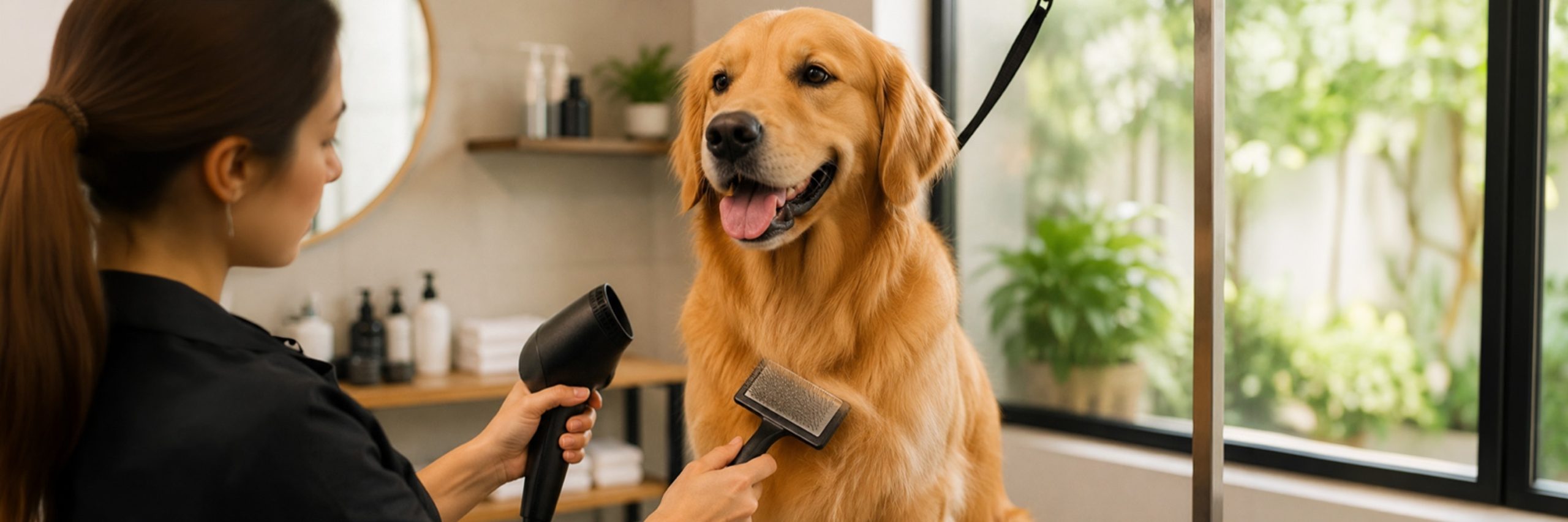
Choose tools according to coat type. A slicker brush can help work through many longer or denser coats, while an undercoat rake may be useful for removing loose undercoat from suitable double-coated breeds. Short-coated dogs may need only a simpler brush or grooming mitt.
Brush only after removing heavy mud and allowing the coat to dry. Pulling a brush through wet, tangled hair can be uncomfortable and may damage the coat.
Do not cut tightly attached mats with household scissors. Dog skin can become pulled into a mat and may be accidentally cut. Ask a veterinarian or experienced groomer to manage severe matting.
4. Avoid Bathing Your Dog Too Frequently
Bathing too frequently may remove natural oils and irritate a dog’s skin and coat. Existing skin problems should be assessed by a veterinarian and treated with appropriate products.
A healthy dog does not need a bath simply because it has been outside in light rain. A paw rinse, damp-cloth clean and thorough drying are often enough.
A full bath may be appropriate when the dog:
- Is covered in mud
- Has rolled in a dirty or potentially harmful substance
- Has a strong persistent odour
- Requires a veterinarian-prescribed medicated bath
- Has a coat that cannot be cleaned adequately through spot cleaning
There is no single ideal bathing frequency for every dog. Coat type, lifestyle, allergies and skin health all matter.
5. Use Only Dog-Appropriate Shampoo
When bathing is necessary, use a product formulated for dogs. Human shampoos, soaps, laundry products and household disinfectants may irritate canine skin.
Before bathing:
- Brush out loose tangles.
- Use comfortably lukewarm water.
- Protect the eyes and inside of the ears.
- Follow the product instructions.
- Rinse thoroughly.
- Dry the coat completely.
Shampoo residue can contribute to irritation, so continue rinsing until the water runs clear and the coat no longer feels slippery.
Do not begin an antifungal, antibacterial or insecticidal shampoo solely because your dog smells different during the monsoon. Skin disease requires an accurate diagnosis, and treatment depends on whether bacteria, yeast, parasites, allergy or another condition is involved.
6. Make Dog Paw Care a Daily Habit
After each rainy walk, rinse or wipe away visible mud, check between the toes and around the paw pads, remove debris gently and dry the paws completely.
Look for redness, swelling, cuts, broken nails, discharge, persistent licking, odour or limping. These signs may indicate irritation, allergy or secondary infection.
Do not apply human moisturisers, essential oils or antiseptics unless your veterinarian confirms that they are safe for your dog.
7. Keep the Ears Clean and Dry
Keep water out of the ear canals during bathing and inspect the ears several times weekly, especially in dogs with drooping or hairy ears.
Seek veterinary advice for head shaking, scratching, redness, pain, odour, swelling or abnormal discharge. Use only a veterinarian-recommended ear cleaner. Never insert cotton buds or pour vinegar, alcohol, oil or hydrogen peroxide into the ear canal.
8. Continue Year-Round Tick and Flea Prevention
Use year-round parasite prevention suited to your dog’s age, weight, health, location and lifestyle. After walks, check the ears, face, neck, armpits, paws, groin, abdomen and tail area.
Do not combine parasite-control products unless a veterinarian confirms that the combination is safe. Never use a dog-only parasite product on a cat.
9. Wash and Dry Bedding, Towels and Grooming Tools
Replace damp bedding immediately and dry washed items completely before reuse. Wash reusable dog towels and drying towels after use, keep brushes and grooming tools clean and avoid sharing them between dogs with unexplained skin problems.
Dry collars, leads, harnesses and raincoats after wet walks, and remove damp accessories once your dog is safely indoors.
10. Trim Nails and Manage Excess Paw Hair
Long nails may reduce stability on slippery floors, so check nail length regularly and trim only the safe outer portion. Long hair between the paw pads can trap water and mud and may be carefully trimmed by an experienced groomer. Avoid cutting close to the skin.
Place non-slip mats near entrances and in areas where your dog regularly walks while wet. This is particularly helpful for puppies, senior dogs and dogs with joint or mobility problems.
11. Check for Skin Infections and Hot Spots
Use grooming sessions to inspect areas that remain warm or damp. Look for persistent redness, pustules, crusts, moist sores, hair loss, pain, unusual odour or repeated scratching and licking.
Bacterial skin infections and hot spots may develop alongside allergies, parasites or other underlying problems. Do not cover moist lesions with oil, powder or tight bandages.
Arrange a veterinary appointment when an affected area is painful, spreading, producing discharge or not improving.
Are Fungal Infections in Dogs More Common During the Monsoon?
Humidity and persistent moisture may contribute to skin problems, but itching, odour and redness do not confirm a fungal infection. Bacteria, yeast, allergies, mites and ringworm can cause similar signs.
Seek veterinary advice for greasy or flaky skin, persistent odour, darkened skin, recurrent ear problems, paw licking or hair loss. Diagnosis may require cytology, skin scrapings or fungal testing. Do not use human antifungal products unless prescribed for your dog.
12. Support Skin and Coat Health Through Balanced Nutrition
Balanced nutrition supports normal skin and coat health but does not treat infections, parasites or allergies. Feed a complete and balanced diet suited to your dog’s life stage and individual needs.
Avoid random diet changes or supplements when itching develops. A veterinarian may recommend an elimination diet when food allergy is suspected. Small treats can support calm grooming but should remain within the dog’s daily food allowance.
How to Make Monsoon Grooming Less Stressful
Introduce grooming while your dog is calm and reward relaxed behaviour as you gradually progress from handling to wiping and brushing. Keep sessions short and stop if the dog freezes, growls, pulls away repeatedly or attempts to bite. Painful grooming should be discussed with a veterinarian or experienced groomer.
Common Monsoon Grooming Mistakes
Avoid:
- Leaving the coat or undercoat damp
- Bathing after every light rain
- Using human shampoo
- Applying powder between the toes
- Ignoring persistent paw licking
- Combining flea and tick products
- Cleaning painful ears at home
- Shaving every double-coated dog
A persistent odour, greasy coat or repeated infection requires veterinary assessment—not simply more shampoo.
Should You Shave a Dog During the Monsoon?
Most dogs do not need to be shaved simply because the weather is humid. Trimming should depend on coat type, matting, skin health and professional advice. Some continuously growing coats require regular clipping, while shaving a double coat extremely short may affect coat quality. Medical clipping may be needed for severe matting, wound care or veterinary procedures.
Discuss major coat changes with a veterinarian or experienced groomer.
When Should You See a Veterinarian?
Arrange a veterinary appointment for persistent itching, repeated paw licking, hair loss, strong skin or ear odour, discharge, painful grooming or recurring sores and hot spots.
Seek urgent care for rapidly spreading painful skin changes, deep wounds, severe swelling, difficulty breathing, collapse or suspected parasite-product poisoning.
Skin and ear disorders can look similar, so treatment should not be chosen based on appearance alone.
Frequently Asked Questions
How Often Should I Bathe My Dog During the Monsoon?
There is no fixed monsoon bathing schedule for every dog. Bathe your dog when the coat is genuinely dirty or when a veterinarian recommends medicated bathing. After an ordinary wet walk, cleaning muddy areas, rinsing the paws when needed and drying the coat thoroughly are usually sufficient.
Should I Wash My Dog’s Paws After Every Rainy Walk?
Check your dog’s paws after every wet or muddy walk and remove visible dirt, mud or debris. Rinse or wipe the paws when necessary, then dry carefully between the toes and around the pads. Persistent redness, swelling, odour, discharge, licking or limping requires veterinary attention.
Can Rainwater Cause Fungal Infections in Dogs?
Rainwater alone does not mean a dog will develop a fungal infection. However, prolonged moisture, damaged skin, allergies and other underlying problems may create conditions in which microorganisms can multiply. Persistent itching, redness, odour, greasy skin or hair loss should be assessed by a veterinarian.
Why Does My Dog Smell After Getting Wet?
Water can make odours from normal skin oils, debris and microorganisms in the coat more noticeable, creating the familiar wet-dog smell. A temporary odour may be normal, but a persistent musty or strong smell accompanied by itching, redness, discharge or greasy skin warrants veterinary assessment.
Can I Use Human Shampoo on My Dog?
Human shampoo is generally not appropriate for routine dog grooming because canine skin has different requirements. Use a shampoo formulated specifically for dogs or one recommended by your veterinarian. Stop using any product that causes redness or irritation, and seek veterinary advice when skin problems persist.
How Can I Prevent Ticks and Fleas During the Rainy Season?
Use consistent veterinarian-recommended tick and flea prevention appropriate for your dog’s age, weight, health and lifestyle. Check the coat and skin after outdoor walks, keep bedding and grooming tools clean and avoid combining parasite-control products unless your veterinarian confirms that the combination is safe.
Final Thoughts
Effective monsoon dog grooming depends more on consistent cleaning, complete drying and regular inspection than frequent bathing.
Clean and dry your dog after wet walks, inspect the paws and ears, maintain year-round parasite prevention and keep bedding and accessories dry. Seek veterinary advice when itching, odour, discharge, hair loss or irritated skin persists.
A simple daily routine can help keep your dog clean, comfortable and easier to examine throughout the rainy season.
This article provides general educational information and is not a substitute for veterinary examination, diagnosis or treatment.
Medically Reviewed by: Dr. Shashank Sinha
Reviewed On:
Editorial Review: Drools Pet Nutrition Team