German Shepherd Guide: Lifespan, Colours, Food & Care Tips
Is a German Shepherd Right for You?
German Shepherds are intelligent, loyal, high-energy, large-breed dogs that need daily exercise, structured training, socialisation, grooming, and a complete and balanced diet. In India, German Shepherd puppy prices vary based on breeder quality, lineage, health records, and location, but long-term care, nutrition, training, and healthcare are equally important considerations before bringing one home.
The German Shepherd is also commonly called an “Alsatian” in India, which is why many people still search for terms like Alsatian dog price in India or GSD puppy price.
What Makes German Shepherds So Popular?
German Shepherds are one of the world’s most recognised working dog breeds because of their:
- High intelligence and trainability
- Loyalty and protective instincts
- Strong working ability
- Confidence and alertness
- Adaptability to different roles
They are commonly used in police work, military service, rescue operations, therapy support, and family companionship.
Their ability to learn commands quickly and form strong bonds with their pet parents makes them one of the most trusted dog breeds globally.
German Shepherd Price in India
German Shepherd puppy prices in India typically range between ₹10,000 to ₹50,000 depending on breeder quality, lineage, location, pedigree, and health records.
What Affects German Shepherd Puppy Price?
| Factor | Impact on Price |
|---|---|
| Show-quality lineage | Higher pricing |
| Pet-quality puppies | More affordable |
| Vaccination & health records | Increases credibility |
| City/location demand | Varies by region |
| Imported bloodline | Premium pricing |
| Responsible breeder practices | Higher but safer |
Adoption vs Buying a German Shepherd Puppy
Adoption may be a suitable option for families willing to provide a home to rescued dogs.
Adoption Advantages
- Lower upfront cost
- Gives a dog a second chance
- Some dogs may already be trained
Buying From a Responsible Breeder
If buying from a breeder:
- Ask for vaccination records
- Check hip and elbow health history
- Observe puppy behaviour and cleanliness
- Avoid unethical puppy mills
A responsible breeder focuses on health, temperament, and proper early socialisation.
Monthly Cost of Owning a German Shepherd in India
Owning a German Shepherd involves ongoing expenses.
| Expense Category | Estimated Monthly Cost |
|---|---|
| Food & nutrition | ₹3,000–₹8,000 |
| Grooming | ₹500–₹2,000 |
| Vet care & supplements | ₹1,000–₹4,000 |
| Training & enrichment | Variable |
| Accessories & maintenance | Variable |
Large-breed dogs generally cost more to maintain than small breeds.
German Shepherd Lifespan
German Shepherds commonly live around 9–13 years, though some veterinary sources list a shorter average of around 7–10 years depending on health, genetics, and population data.
Good nutrition, weight control, responsible breeding, joint care, exercise, and regular vet checks can support a longer, healthier life.
German Shepherd Size, Weight and Growth
German Shepherds are large-breed dogs with strong muscular builds.
| Type | Height | Weight |
|---|---|---|
| Male German Shepherd | 24–26 inches | 30–40 kg |
| Female German Shepherd | 22–24 inches | 22–32 kg |
Puppies grow rapidly during the first year and need controlled nutrition to support healthy skeletal development.
German Shepherd Temperament and Behaviour
German Shepherds are known for being:
- Loyal and protective
- Highly trainable
- Energetic and alert
- Confident and intelligent
- Deeply attached to family members
Without training, stimulation, and structure, they may develop behavioural issues like excessive barking, anxiety, or destructive behaviour.
Are German Shepherds Good Family Dogs?
Yes, German Shepherds can be excellent family dogs when properly trained and socialised.
They often form strong bonds with family members and can be affectionate, protective, and playful.
However:
- Early socialisation is important
- Supervision around small children is recommended
- Training consistency matters
Their size and energy level may not suit every household.
Can German Shepherds Live in Apartments?
Yes, but only if they receive enough daily exercise, mental stimulation, and outdoor activity.
Apartment size matters less than the pet parents’s ability to provide:
- Daily walks
- Structured exercise
- Training sessions
- Mental enrichment
German Shepherds left inactive for long periods may develop stress and behavioural problems.
German Shepherd Colours: Black, White, Sable and More
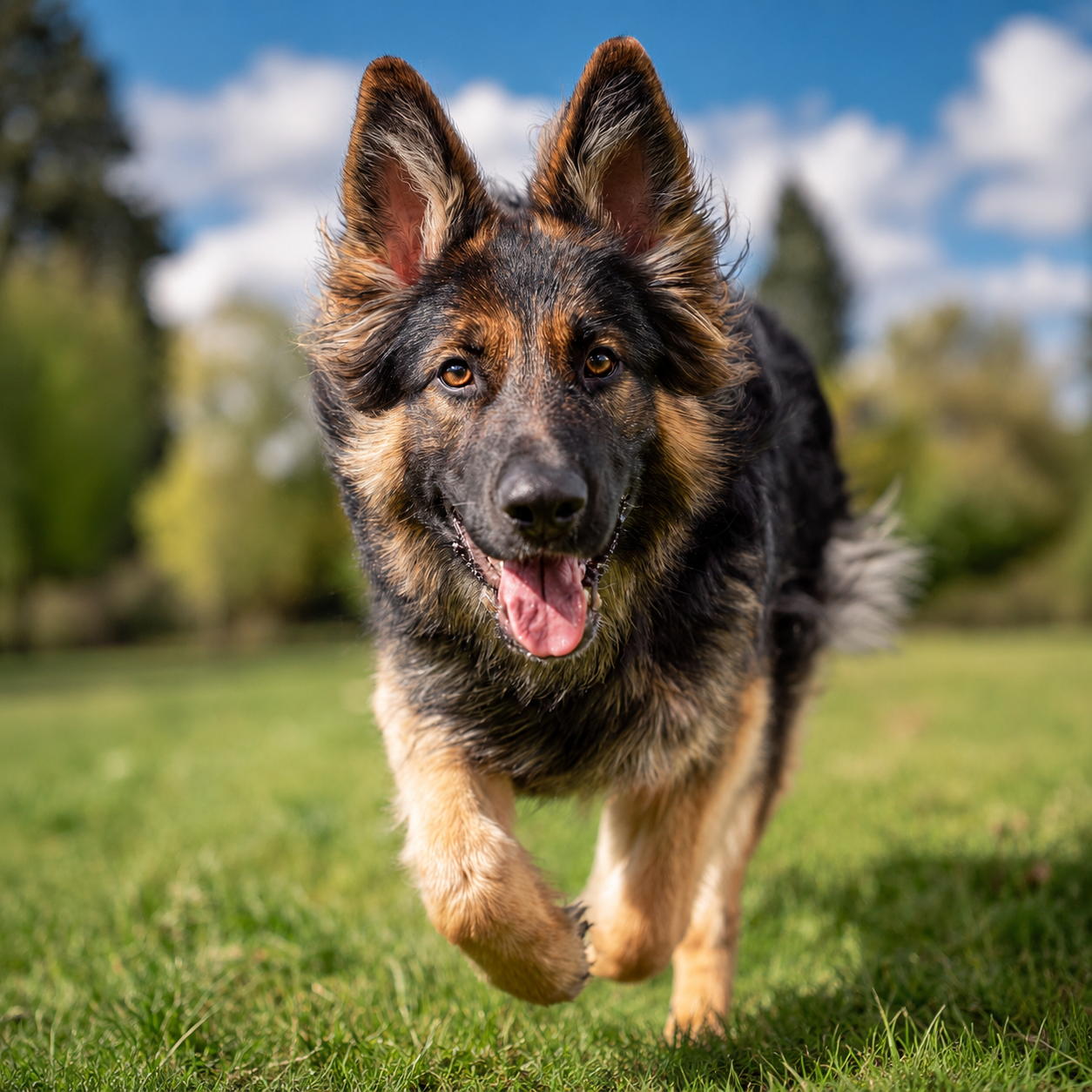
German Shepherds come in several coat colours and patterns.
Common German Shepherd Colours
- Black and tan German Shepherd
- Sable German Shepherd
- Black German Shepherd
- Bi-coloured German Shepherd
- White German Shepherd
- Long-coat German Shepherd
- Black and red German Shepherd
Coat colour does not determine intelligence or temperament. Responsible breeding and training matter far more.
Black German Shepherd
The black German Shepherd dog has a solid black coat and is considered visually striking.
Characteristics
- Rare compared to black-and-tan coats
- Common in working lines
- Same temperament and care need as standard German Shepherds
White German Shepherd
The white German Shepherd dog is not a separate breed.
Key Facts
- Not albino
- Same intelligence and behaviour traits
- Less common in India
- Requires similar grooming and care
German Shepherd Puppy Care Guide
Early puppy care plays a major role in long-term behaviour and health.
Important Puppy Care Basics
Feeding
- Feed measured portions
- Avoid overfeeding
Sleep & Routine
- Maintain consistent schedules
- Provide adequate rest
Vet Care
- Vaccination schedule
- Deworming
- Growth monitoring
Environment
- Safe chewing toys
- Comfortable sleeping area
- Controlled exposure to stairs and jumping
German Shepherd Training and Socialisation
German Shepherds thrive when training starts early.
Training Focus Areas
- Basic obedience
- Recall training
- Leash behaviour
- Controlled socialisation
- Positive reinforcement
German Shepherd Puppy Training Timeline
| Puppy Age | Training Focus |
|---|---|
| 8–12 weeks | Name recognition, potty training, socialisation |
| 3–4 months | Sit, stay, leash introduction |
| 4–6 months | Basic obedience and impulse control |
| 6–12 months | Advanced training and confidence-building |
German Shepherd Exercise Needs
Most German Shepherds need at least 1–2 hours of daily physical and mental activity depending on age, health, and energy level.
This should include:
- Walks
- Structured play
- Training sessions
- Sniffing activities
- Puzzle games
- Rest and recovery
Puppies need age-appropriate exercise and should not be over-exercised while their joints are developing.
Common German Shepherd Health Problems
German Shepherds are prone to several health concerns, especially without proper breeding practices and long-term care.
| Health Issue | Why It Matters | Signs to Watch For |
|---|---|---|
| Hip and elbow dysplasia | Common in large breeds and can lead to pain, mobility issues, or arthritis over time | Limping, stiffness, difficulty rising, bunny-hopping gait |
| Bloat / GDV | A life-threatening emergency more common in deep-chested breeds like German Shepherds | Swollen abdomen, unsuccessful retching, restlessness, collapse |
| Degenerative myelopathy | A progressive spinal condition that affects movement and coordination | Hind-leg weakness, dragging paws, wobbling |
| EPI (Exocrine Pancreatic Insufficiency) / digestive issues | Can interfere with nutrient absorption and healthy weight maintenance | Weight loss despite appetite, loose stools, gas |
| Skin allergies | Can affect comfort, skin condition, and coat quality | Itching, redness, ear infections, hair loss |
| Obesity | Excess weight places added strain on joints, mobility, and heart health | Weight gain, low stamina, difficulty moving |
Common Issues Include
- Hip dysplasia
- Elbow dysplasia
- Bloat (gastric torsion)
- Digestive sensitivity
- Skin allergies
- Joint and mobility problems
- Obesity
Signs Pet Parents Should Watch For
- Limping
- Difficulty standing
- Digestive upset
- Excessive scratching
- Low activity levels
Regular veterinary checkups help detect problems earlier.
What Should You Feed a German Shepherd?
German Shepherds are large, active dogs, so they need a complete and balanced diet that supports muscle strength, digestion, joint health, skin and coat quality, and a healthy weight.
Puppies need large-breed growth nutrition, while adults need controlled calories and high-quality protein to maintain lean muscle.
Best Food for German Shepherds: What Large Breeds Need
- High-quality protein for muscle maintenance
- Balanced calcium and phosphorus for skeletal development
- Omega fatty acids for skin, coat, and joint support
- Digestible ingredients for sensitive stomachs
- Controlled calories to avoid excess weight
- Feeding frequency based on age
- Avoiding heavy exercise immediately before and after meals
A complete and balanced large-breed diet helps support healthy growth, mobility, digestion, and long-term wellbeing.
Not sure which diet may suit your dog’s needs? Explore complete and balanced dog food options designed for active dogs like German Shepherds.
German Shepherd Puppy Feeding Guide
Feeding frequency changes as puppies grow.
| Age | Feeding Frequency |
|---|---|
| 2–3 months | 4 meals/day |
| 3–6 months | 3 meals/day |
| 6–12 months | 2–3 meals/day |
| Adult | 2 meals/day |
Always adjust portions based on activity level, body condition, and veterinary guidance.
Grooming, Shedding and Coat Care
German Shepherds are heavy shedders.
Grooming Essentials
- Brush several times weekly
- Bathe only when needed
- Check ears and nails regularly
- Maintain dental hygiene
Long-coat German Shepherds may require additional brushing.
Is a German Shepherd Suitable for Indian Homes?
A German Shepherd can do well in Indian homes if the pet parent can provide daily exercise, training, grooming, mental stimulation, and proper cooling during hot weather.
Important Considerations for Indian Climate
- Avoid peak summer heat walks
- Ensure access to shade and water
- Never leave them in enclosed hot spaces
- Monitor heat stress signs carefully
They may struggle in homes where they are left alone for long hours or do not get enough activity.
If you’re still comparing breeds based on lifestyle, climate, space, and activity needs, you can also explore different dog breeds suitable for Indian homes to find the right match for your family and routine.
German Shepherd vs Labrador vs Belgian Malinois
| Breed | Energy Level | Training Difficulty | Protection Instinct | Family Suitability |
|---|---|---|---|---|
| German Shepherd | High | Moderate | Strong | High |
| Labrador Retriever | Moderate | Easy | Low | Very High |
| Belgian Malinois | Very High | Advanced | Very Strong | Moderate |
This comparison helps pet parents choose a breed that matches their lifestyle and training experience.
Key Takeaways
- German Shepherds are intelligent, loyal, active dogs that need training and structure.
- In India, puppy price depends on breeder quality, location, lineage, and health records.
- German Shepherds need daily physical exercise and mental stimulation.
- Common health concerns include hip and elbow dysplasia, bloat, digestive sensitivity, allergies, and mobility issues.
- A complete and balanced diet helps support growth, muscle, digestion, joints, and a healthy weight.
- Coat colour does not decide temperament; responsible breeding and training matter more.
FAQs
What is the price of a German Shepherd in India?
German Shepherd puppy prices in India usually range between ₹10,000 and ₹50,000 depending on breeder reputation, lineage, location, and health records.
How long do German Shepherds live?
German Shepherds commonly live around 9–13 years, although some may live shorter or longer depending on genetics, healthcare, nutrition, and lifestyle.
What is the best food for German Shepherd puppies?
German Shepherd puppies need complete and balanced puppy food that supports controlled growth, bone development, digestion, and healthy weight management.
Are German Shepherds easy to train?
Yes. German Shepherds are highly intelligent working dogs that usually respond very well to structured training and positive reinforcement.
Can German Shepherds live in apartments?
Yes, but only if they receive sufficient daily exercise, training, and mental stimulation.
Are black German Shepherds different from regular German Shepherds?
No. Black German Shepherds are the same breed with a different coat colour variation.
Is a white German Shepherd rare?
White German Shepherds are less common than standard coat colours, especially in India.
How much exercise does a German Shepherd need daily?
Most adult German Shepherds need around 1–2 hours of combined physical and mental activity daily.
Are German Shepherds good with children?
They can be excellent family dogs when properly socialised and trained from an early age.
What is the difference between a German Shepherd and an Alsatian?
They are the same breed. “Alsatian” is an older alternative name still commonly used in India and some other regions.
Final Thoughts
German Shepherds are among the most intelligent, loyal, and versatile dog breeds in the world.
But they are not low-maintenance dogs.
They need:
- Consistent training
- Daily exercise
- Mental stimulation
- Proper nutrition
- Long-term commitment
When raised with structure, care, and responsible parenting, a German Shepherd can become a deeply loyal companion and an exceptional family dog for many years